
Riding in wet weather demands heightened awareness, smooth control inputs, and a deep understanding of road surface friction. Master the critical skills needed to navigate rain safely on two wheels.
For any motorcyclist, encountering rain on an open stretch of road is an inevitable part of riding. Whether you are a daily commuter facing an unexpected afternoon thunderstorm or a long-distance touring rider pushing through a weather front, wet pavement changes the fundamental physics of motorcycle control. Water reduces the friction coefficient between your tires and the asphalt, increases stopping distances, and drastically degrades visual clarity for both you and surrounding motorists.
However, riding in wet conditions does not have to be a terrifying experience. Modern motorcycle tires, advanced rider aids, and proper wet-weather gear make riding in the rain manageable—provided you understand how road surface hazards change when wet. In this comprehensive guide featuring essential motorcycle rain safety tips, we explore the physics behind wet traction, break down the critical “First 15 Minutes” rule, and outline practical techniques to keep your bike rubber-side down when the sky opens up.
The “First 15 Minutes” Rule: Why Initial Rainfall Is the Most Dangerous

Ask experienced motorcycle safety instructors about wet-weather riding, and they will almost universally warn you about the beginning phase of a storm. The initial 10 to 15 minutes of rain create the single most hazardous road environment a rider can encounter—far more dangerous than riding through a steady downpour an hour later.
During dry weather, engine oil, transmission fluid, coolant, diesel fuel, and tire rubber dust settle deep into the microscopic pores of the asphalt road surface. When rain first starts to fall, the light moisture floats these accumulated oils and greases up to the top layer of the road, creating an invisible, slick slurry. Because there is not yet enough water volume to wash these contaminants away into roadside ditches, the road turns into a virtual ice rink.
If you encounter the sudden onset of rain, consider pulling off to a safe gas station or rest area for 15 to 20 minutes. Allowing heavy rainfall to thoroughly flush the emulsified oil film off the pavement leaves behind clean, wet asphalt with significantly more predictable traction.
Understanding Reduced Traction and Friction Coefficients
When riding on dry, clean asphalt, your motorcycle tires enjoy a high coefficient of friction (typically around 0.8 to 0.9). On a fully wet road, that coefficient can drop to 0.5 or lower, depending on pavement quality and tire wear. Understanding this traction loss dictates how you must adjust your riding style:
- Increase Your Following Distance: Double or triple your space cushion behind leading vehicles from 2 seconds to 4 or 5 seconds to account for extended braking distances.
- Reduce Cornering Lean Angles: Keep the motorcycle chassis as upright as possible through turns. Instead of leaning the bike heavily, lean your body slightly into the turn while keeping the motorcycle higher on the center tread of the tires where maximum contact patch exists.
- Smooth Control Inputs: Apply throttle, front brake, and rear brake with progressive, gentle pressure. Abrupt hand or foot inputs snap the limited traction boundary, inducing immediate front-end tucks or rear-wheel spin.
Identifying High-Risk Wet Road Hazards
Rain does not affect all parts of the road equally. As a rider, you must actively scan the road surface to identify and avoid specific street elements that lose nearly 100% of their friction when wet:
| Road Hazard Surface | Risk Factor in Wet Conditions | Safe Riding Adjustment |
|---|---|---|
| Painted Thermoplastic Lines | Extremely slick; zero traction for tires | Cross perpendicular; avoid braking or leaning while on lines |
| Metal Manhole Covers & Expansion Joints | Becomes as slippery as wet ice | Roll over with coasting throttle and zero lean angle |
| The Center of the Traffic Lane | Concentrated dripping zone for car oil/fluids | Ride in the left or right tire tracks left by preceding vehicles |
| Tar Snakes (Pavement Crack Sealant) | Melts and squirms under wet rubber | Maintain a steady line; do not make abrupt steering inputs |
Essential Wet-Weather Riding Techniques
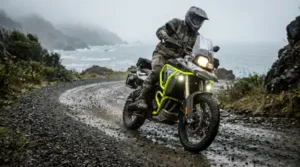
Adopting proper mental scanning habits and physical control techniques is essential when navigating slick asphalt. Follow these proven riding protocols whenever you find yourself on wet roads:
- Rely on Progressive Front Braking: Contrary to old riding myths, your front brake remains your primary stopping tool in the rain. However, you must load the front tire gradually to transfer weight forward before squeezing for maximum stopping power. Consult national motorcycle training guidelines through the Motorcycle Safety Foundation (MSF) to review proper traction management principles.
- Use Preceding Vehicle Tire Tracks: Position your motorcycle in the clean tracks carved out by the tires of the car ahead of you. These tires act as squeegees, temporarily displacing standing water and giving your bike a cleaner path of asphalt.
- Maintain Vision and Prevent Visor Fogging: Visibility drops fast in rainy weather. Ensure your helmet visor is equipped with a Pinlock anti-fog insert or treated with hydrophobic anti-fog sprays. Never wipe your visor with dirty gloves, which scratches the outer shell and distorts headlight glare from oncoming traffic.
- Leverage Electronic Rider Aids: If your motorcycle has selectable riding modes, switch to “Rain Mode.” Rain modes reduce engine throttle response, soften power delivery, and increase Rain Traction Control (TC) and Anti-lock Braking System (ABS) sensitivity. Review highway weather safety reports published by the National Highway Traffic Safety Administration (NHTSA) for broader statistics on wet road accident prevention.
Gear Up: Staying Warm and Dry to Maintain Cognitive Focus
Riding in the rain is not merely an issue of tire traction—it is also a challenge of human endurance and mental alertness. When rain penetrates your riding jacket or gloves, windchill rapidly lowers your body temperature. Physical shivering and cold fingers lead to delayed reaction times, stiff brake control, and impaired judgment.
Invest in dedicated, high-quality waterproof riding gear featuring breathable membranes like Gore-Tex, or pack a compact 2-piece high-visibility rain suit in your saddlebags. Keeping your core body temperature stable ensures your mind stays 100% focused on scanning for road hazards and executing smooth inputs.
Final Thoughts
Riding a motorcycle safely in wet weather comes down to preparation, patience, and smooth execution. By respecting the dangerous “First 15 Minutes” of rainfall, avoiding slick road markings, keeping your bike upright through turns, and wearing appropriate waterproof gear, you can navigate wet highways confidently and arrive at your destination safely every time.