
When riding a motorcycle, physical skill and throttle control are only half of the equation. Because motorbikes leave zero room for structural protection during a collision, avoiding accidents before they happen is the ultimate form of self-defense. This is where active mental processing becomes a rider’s most powerful safety tool.
Developed as a core framework for hazard avoidance, the SIPDE system motorcycle safety strategy is a structured 5-step mental process designed to help riders read traffic dynamics in real time. SIPDE stands for Scan, Identify, Predict, Decide, and Execute. By practicing this method on every ride, you transform passive observation into proactive defense.
Step 1: Scan (Search the Environment Continuously)
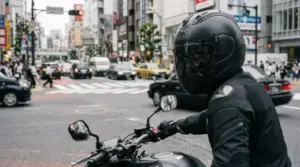
Scanning is the active, continuous searching of your riding environment. Instead of fixating on the pavement directly in front of your front wheel, scanning requires maintaining a wide field of vision that extends 12 to 15 seconds ahead along your path of travel.
- Far-Ahead Scanning: Look 12 to 15 seconds down the road to identify incoming traffic patterns, construction zones, or changing light signals early.
- Side-to-Side Checking: Continually move your eyes across blind intersections, driveways, parking lot exits, and side streets where turning vehicles frequently pull out.
- Mirror and Instrument Sweep: Perform regular 5-to-7-second sweeps of your rearview mirrors to monitor vehicles behind you, keeping track of tailgaters or fast-approaching traffic.
Step 2: Identify (Spot Potential Road Hazards Early)
Scanning gives you raw visual information; identifying is the process of sorting through that visual field to isolate real and potential hazards. Hazards generally fall into three distinct categories:
| Hazard Category | Common Examples | Rider Risk Factor |
|---|---|---|
| Other Road Users | Drivers turning left, distracted commuters, tailgaters, merging trucks. | Unpredictable vehicle direction changes and blind spot collisions. |
| Surface Hazards | Loose gravel, wet manhole covers, oil slicks, painted road markings. | Sudden loss of tire traction and cornering instability. |
| Environmental & Layout | Blind curves, cresting hills, heavy crosswinds, glare from setting sun. | Reduced reaction window and compromised sightlines. |
Step 3: Predict (Anticipate How the Hazard Will Behave)
Once you isolate a hazard, instantly ask yourself: “What is the worst-case scenario that could happen here?” Predicting requires assuming that other road users may not see you or may make reckless decisions.
For example, if you see a car waiting at a side street waiting to turn right onto your road:
- Predict that the driver might pull out directly into your lane without looking.
- Predict how quickly you would need to react if they stop mid-turn, blocking your path.
- Predict whether the road surface behind or beside you provides a clean escape route.
Anticipating worst-case outcomes converts surprise events into anticipated reactions, dramatically cutting down your physical response time.
Step 4: Decide (Formulate Your Plan of Action)
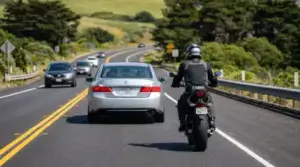
After predicting potential conflicts, immediately choose the safest course of action. Your decision should always prioritize creating space and maintaining control.
Decisions typically involve three primary adjustments:
- Adjusting Speed: Decelerating early by rolling off the throttle, downshifting, or covering your brake levers to allow a hazard to clear ahead of you.
- Adjusting Position: Moving from lane position 1 to lane position 3 to increase lateral distance from an oncoming vehicle or opening up your sightlines around a curve.
- Communicating Intent: Using your turn signals, tapping your brake light to flash your tail lamp, or sounding your horn to alert distracted drivers.
To review officially recognized traffic survival guidelines, check out the Motorcycle Safety Foundation official resources.
Step 5: Execute (Carry Out Your Defensive Maneuver Smoothly)
The final step is translating your mental decision into smooth physical action. Execution must be deliberate and controlled—panicked, harsh control inputs often create secondary hazards like rear-wheel skids or loss of leaning stability.
Key execution principles include:
- Progressive Braking: Squeezing the front brake lever smoothly to load the front tire before applying maximum stopping power.
- Countersteering: Pushing firmly on the handlebar in the direction you want to turn for rapid, precise obstacle swerving.
- Maintaining Escape Paths: Always leaving yourself an “out” (such as the shoulder of the road or an open adjacent lane) in case your primary path is blocked.
Integrating SIPDE into Every Ride
When you first start practicing the SIPDE system, it may feel like a lot of conscious mental effort. However, over time and with consistent practice, this 5-step process becomes second nature.
By continuously scanning, identifying hazards early, predicting risky behaviors, deciding on actions in advance, and executing smoothly, you maintain complete control over your riding environment and significantly lower your accident risk.